


.png)
Your skiing isn't broken.
Your body is doing its job.
After surgery, menopause, injury — your body learned to be more careful. It catalogued everything. Every fall. Every patch of ice. Every person who skied too close. Every time you pushed through when you didn't want to.
It's constantly predicting what might happen based on that back catalogue. Trying to keep you safe — physically and socially. That freeze at the top of the run, a feeling of tightness in your chest, legs bracing — that's not weakness. That's protection.
The skill is still there. What's changed is the information your nervous system is working with. Fear of re-injury. Pressure to keep up. Perimenopause narrowing the margin between fine and overwhelmed. A group moving faster than feels right.
When you understand what's actually happening, you stop fighting yourself on the mountain. And that's where skiing starts to feel good again — on your terms.
"Most ski coaching asks: how do I improve? I'm more interested in: under what conditions does your nervous system settle and feel safe enough to let you ski the way you actually can?"
Nervous System Literacy for Women Who Ski
The layer beneath technique and confidence —
for when skiing starts to feel different
Remember when skiing felt like pure joy? That first whoosh of cold air, your stomach flipping between fear and thrill, being fully alive on snow.
Then life happened. Surgery. Menopause. Injury. Caring for everyone else. Quiet transitions that reshape how your body responds on the slopes — and nobody tells you that's what's happening.
You stand at the top of a run you've skied for years. A tightness somewhere between your chest and your breathing. That voice: what's wrong with me?
Nothing is wrong with you. Your body is doing its job — protecting you after everything it's been through. And there's a way to work with that instead of fighting it.
You might recognise this
These aren't character flaws. They're information.
You brace before the first turn on a run you've skied for years. Legs capable. Skills intact. Something else is running the show.
The resort is busy, the snow is icy, and what felt fine yesterday now feels like too much. You're not sure if you're being sensible or missing out.
Your boots feel different. The cold hits harder. You arrive at the first lift already managing — and the skiing hasn't even started yet.
Everyone's already at the bottom, watching. Your skiing isn't the problem — you're making fluid, careful turns — but that voice creeps in anyway. I'm too slow. I don't belong in this group.
You've been cleared — from injury, surgery, a difficult year — and technically you're ready. But your body pauses at the top of the run as if it hasn't had the memo.
You catch yourself wondering whether this will be the holiday when you enjoy skiing again — or the one where you quietly decide it's not worth the effort.
This isn't about courage or kit. It's about understanding what your body is actually telling you — and learning to work with it instead of overriding it.
M Horridge — A Different Way to Understand the Freeze
"I really appreciated the body-based element of Sarah's talk. It gave me a different way to understand why I can be a capable skier, know what I need to do and still freeze or overthink in certain situations, like ice or steeps some days but not others."
Attendee, Northern Snow Show 2025
M Horridge — The Pressure to Keep Up
"She showed that hesitation on the mountain isn't necessarily about technical ability, and that the way people ski together can either increase pressure or help someone feel more able to make their own choices. Thought-provoking, practical and relevant to anyone who skis with a partner, family or group of friends."
Attendee, Northern Snow Show 2025
FREE RESOURCE
Why Skiing Feels Different in Midlife
One clear explanation a day, with one small thing to try.
LISTEN
What your body is telling you
That freeze at the top of a run, the tight chest before the first turn: information, not failure.
Your body reads the slope, the group and the day before you've made a single conscious decision. Reading it accurately is a skill you can learn.
RESPOND
What your nervous system actually needs
What helps you move out of protection and back into capacity, so you can ski the way you know you can again.
CHOOSE
Ski on your own terms
Challenging terrain or easy cruising. Yes to a run you've been thinking about, or a different line today.
Real confidence is having the capacity to choose based on what you want, not what fear decides.
Five short emails that explain why skiing feels different in midlife.
Free. Your welcome email arrives straight away. Day 1 follows tomorrow.
NERVOUS SYSTEM LITERACY — FOR SKIERS
You're Not Broken.
Just Ready
A 20-minute audio guide for women who ski — but find it feels different now.
Recorded in Sarah's voice. The explanation you've been waiting for, delivered the way a good friend would — directly, warmly, without jargon. Why your body responds the way it does on snow. What's actually happening when you freeze at the top. And three things that genuinely help.
Listen pre-holiday. On the drive to the resort. Whenever the doubt starts creeping in.
Comes with a short companion PDF — something to read the night before, or on the transfer. The key points from the audio, written out so they stay with you.
Listening note: best when you're not driving or need full attention.
THE RECOVERY GAP
Cleared to Ski.
Body still pausing.
You've done the rehab. You've been signed off. By every external measure, you're ready.
And yet — at the top of the run, something hesitates. You look down at terrain you know. And wait.
This is the Recovery Gap. The space between medical clearance and felt readiness. Between knowing you can and trusting that you will.
It doesn't close with more lessons, more positive thinking, or more time. It closes when your nervous system gets different information — through real experience, read accurately, without pressure.
"I froze on slopes I used to ski without a second thought — sensing imminent danger everywhere I looked. I know this space from the inside."
After back surgery and perimenopause, Sarah found herself exactly here. The skill was intact. The nervous system was still doing its job — protecting, scanning, running old patterns on new terrain.
She skied with a back protector for years afterwards. Like a safety blanket. The tight grip on the poles. The weight shifting back. The hypervigilance that made every other skier feel like a threat.
The Recovery Gap isn't a confidence problem. It doesn't close with technique or positive thinking. It responds to something quite different — and that's what FlourishWell is built around.
Cleared after injury but still bracing on familiar terrain
Perimenopause changed how your body recovers and responds to snow
Time away - and the ease hasn't come back with it
Technically fine. The trust isn't there yet
WORK WITH ME
Nervous system-informed coaching, online
Sessions are online via Zoom. We work with what's actually happening — not just the thoughts at the top of the run, but what your nervous system is carrying before you get there.
I take a small number of private clients each quarter. If you're considering it, a discovery call is the right place to start — no obligation, 30 minutes.
This is for you if you've tried pushing through and it hasn't shifted. If you want to understand what's happening, not just override it.
Small Groups and Workshops
Planning a trip with friends or family? Part of a ski club?
Small group sessions — online or in person — for groups of 4–8 who want to ski more coherently together. We look at what actually shapes confidence on the mountain: reading each other's cues, making better decisions as a group, and skiing at a pace that works for everyone.
"Everyone in a group skis differently on different days. Understanding that — reading it without making it someone's fault — changes everything about how a group functions on snow."
Friends & Families
Ski Clubs
Mixed ability groups
4 - 8 people
ABOUT SARAH
Sport-informed. Nervous system-literate. She's felt like this too.
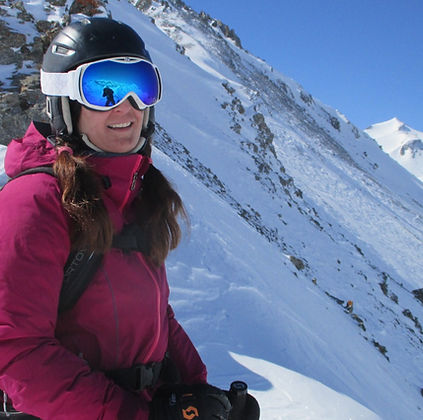
Sarah is a Nervous System Coach, holding a Diploma in Therapeutic Coaching and BASI-qualified as a Ski Instructor with eight years working across the Alps and Europe. She has skied since childhood.
At 40, she had back surgery. Then perimenopause amplified everything — she found herself freezing on slopes she used to ski without a second thought, her body replaying old threat patterns and amplifying every uncertainty into something that felt like danger.
What helped wasn't technique or positive thinking. It was understanding why skiing felt the way it did, what her nervous system was actually responding to, and what she wanted from being on snow. Once that became clear, the feelings had less grip. Choice opened up again.
Confidence isn't just in your head. It's in how your nervous system responds. She needed it, found it, and built FlourishWell around it.