


.png)
Ski Confidence After Injury: You've Bounced Back – But Your Body Hasn't

Updated: Sep 16
For midlife skiers caught in the Recovery Gap between being cleared and feeling ready on the mountain
Originally published 17th February 2026. Updated September 2026

You've done the rehab. The physio signed you off. The scan looks good. You're back in the gym, back running, back to most of what you did before.
But skiing?
Skiing is where it shows up.
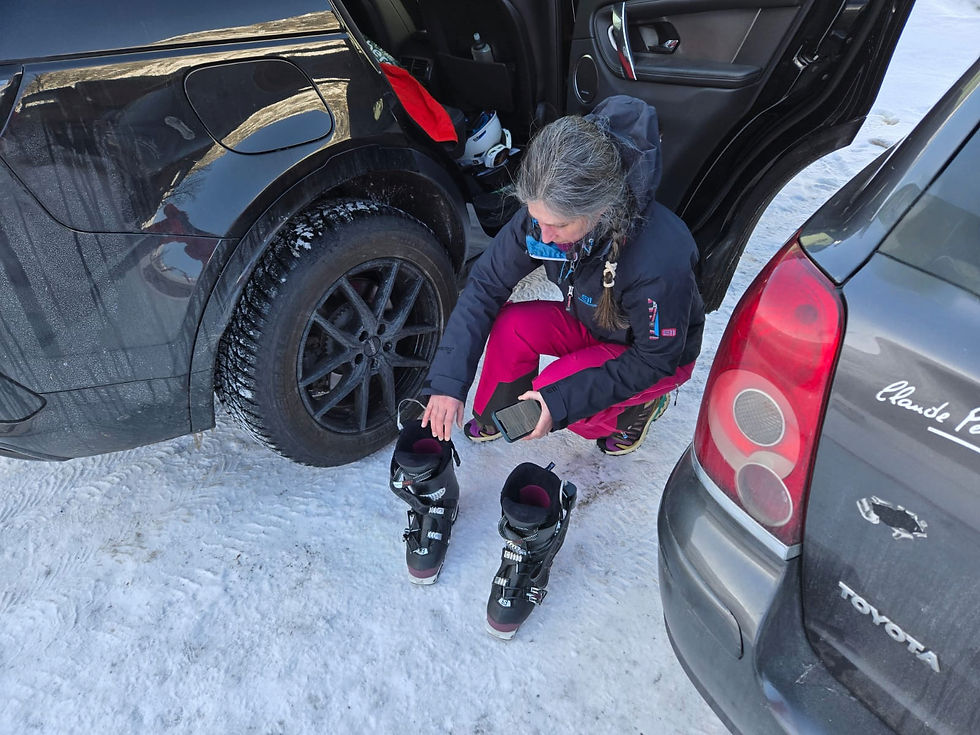
It starts before you've made a single turn. The tightness as you squeeze into your boots. The glance around the boot room. The way your breathing changes on the chairlift – watching other skiers, noticing how fast everyone else seems to be going. By the time you're standing at the top of the run, something has shifted. Not panic. Just a pause that wasn't there before – somewhere between your chest and your breathing.
This is the part no one prepared you for. Technique, strength, equipment and rehab all matter. But sometimes they don’t explain the whole experience.
That isn’t a confidence problem. It’s a capacity problem.
This is the space I call The Recovery Gap – the gap between being medically cleared to ski and your body actually feeling ready to.
Medical Clearance Doesn't Mean Your Body Feels Ready on Snow
Medical clearance tells you that the injury has healed enough for you to return. It doesn't guarantee that returning will feel straightforward.
Your body doesn't read discharge notes. It responds to what happens when you're back in the situation again.
After an injury, it's common to become more alert to anything connected with what happened before. Other skiers getting too close. A patch of ice. Terrain that feels steeper than you expected. The group pulling ahead. A friend waiting at the bottom. The possibility of losing control.
That extra scanning can be useful. Skiing needs activation. You need focus, energy and quick reactions. The problem is when that activation starts to interfere with your movement, your focus, your ability to make choices and enjoyment of skiing.
And that doesn't always look like panic. It can look like bracing, hesitating at the top of a run, avoiding terrain you'd normally ski, going along with the group when you actually want to stop, or simply feeling flat and disconnected from the skier you know you are.
So when you stand at the top of a run, your body isn't responding to the fact that your ACL is healed or your MRI is clear. It's responding to what's happening now. Is that a patch of ice? Can I control my speed? Can I stop if I need to? Is the group going to wait?
Your nervous system doesn't update because you understand the discharge notes. It updates when your body feels that movement is safe.
If this is sounding familiar, my guide to Fear of Skiing explains the wider pattern behind it, including why being physically recovered is not always the same as feeling ready on snow.
Why Am I Fine Everywhere Else – But Not on the Mountain?
The recovery gap doesn't always show up in everyday routines.
It shows up in environments where response time matters, where conditions are unpredictable, and where you can't fully control what happens next.
Skiing asks for exactly the things a protective nervous system resists: speed, commitment to a fall line, trust in balance while the surface changes underneath you, split-second decisions about terrain you can't always see clearly. The sensory demand is enormous – and for a system still scanning for the conditions that caused the original injury, a ski slope offers an overwhelming number of things to scan for.
This is why someone can be completely fine in every other physical context and still hesitate at the top of a blue run.
It's not inconsistency. It's specificity. Your nervous system learned something about this particular kind of movement, in this particular environment, and it hasn't yet had enough new experience on snow to update that learning.
And the original injury doesn't have to have been catastrophic. A fall, pain, loss of control or months of uncertainty can all change what you notice and how you respond when you return.
Your nervous system responded. And it's still responding.
That isn't weakness.
It's a body that hasn't caught up with the healing yet.
What Ski Confidence After Injury Actually Looks Like on Snow
It rarely looks like fear in the way most people imagine it.
It can look like the first run of the morning going well – genuinely well – and then things starting to add up. The group wants to ski steeper terrain. You're feeling tired. You notice yourself bracing more and feeling uncomfortable when others ski too close, too fast to you. The run you skied comfortably at 9am feels much harder at 1pm.
It can show up in your movement too. You know how to ski, but tension and hesitation change how you move. Your weight shifts back. You ski more defensively. You grip harder and have less freedom to respond to what is happening underneath you.
Or it can change the choices you make. A familiar run suddenly feels like more than you want. You let the others go ahead. You quietly decide to sit one out.
None of this means you've lost your ability. It means something is starting to get in the way of your movement, your focus, your choices or your enjoyment.
The gap isn't between your ability and the terrain. It's between knowing you can ski and your body having the bandwidth to let you.
When Midlife Widens the Gap

For many women, the Recovery Gap doesn't happen in isolation.
It happens alongside perimenopause or menopause. Disrupted sleep. Changes in energy, recovery and temperature regulation. Years of accumulated stress.
Then add the demands of a ski trip – the travel, the altitude, the early starts, the cold, the social energy of being in a group, the boots, the terrain and the effort of skiing itself.
You may be able to cope with each thing on its own. But things add up.
And when more of your nervous system capacity is already being used, there is less available for the demands of skiing.
That can mean more bracing, more hesitation, less flexibility in how you respond – and less enjoyment – even when you are physically healed.
That isn't a confidence problem. It's a capacity problem.
I know this because I've lived it. Back surgery, followed by a toe surgery that meant I couldn't get into ski boots for months. Years of chronic pain where options felt like they were seeping away. I became what I call a grey woman – it changed how I looked because it reflected how I felt.
And when I got back on snow? Every jolt was a threat. The chairlift catching the back of my knee sent a shock up my body that triggered immediate catastrophising – I was going to be paralysed. The thought of someone skiing into me. Slipping on ice. Landing on my coccyx. I knew I wasn't broken. But I felt so fragile that I could break at any moment – despite the surgery, the rehab, the fact that I was back doing everything else in daily life. None of that translated to the mountain. I skied with a back protector for years afterwards, like a safety blanket.
If you've been there, you'll recognise it. The tighter grip on the poles. The weight shifting back. The hunched posture that doesn't match the skier you know you are. The hypervigilance – snapping at anyone who gets too close, flinching at speed, the fear of the worst happening again. You're telling yourself it's fine, you love this, this run is beautiful. But your body is pulling the handbrake. And that gap between what you're telling yourself and what your body is doing? That's the Recovery Gap, lived from the inside.
Your nervous system doesn't do nuance. It does safe or not safe.
Then perimenopause reshaping how my body responds to everything – not something to recover from, but a transition that changed the terms. Each one narrowed the window differently. Each one taught me something about what my nervous system needed that no amount of technique or positive thinking could replace.
I explore the bandwidth side of this in Why Don't I Enjoy Skiing Anymore? – because sometimes recovery reveals itself not in daily life, but in movement.
Why the Usual Advice Only Gets You So Far
A few lessons with a sympathetic instructor can make a real difference. Time on gentler terrain, with the right people, at your own pace, can help too.
But the Recovery Gap isn't only about technique. You can know how to ski and still find that tension, fatigue, pressure or fear start to interfere with your movement, your focus, your choices or your enjoyment.
Pushing through can make that harder. If every return to skiing becomes another experience of bracing, trying to keep up or overriding what you're noticing, you're not building the nervous system capacity you need for skiing to feel manageable again.
Group dynamics matter too. The well-meaning friend who says, "come on, you'll be fine." The group that's already heading for the lift. The unspoken pressure to keep up. Each thing may seem small on its own, but things add up.
What helps close the gap is experience. Not one big day where you prove you can still do it, but repeated experiences where the demands are manageable enough for you to move, focus, make choices and enjoy the skiing.
That is how you begin to rebuild nervous system capacity. You notice what is getting in the way, respond to it, and give yourself enough room to stay engaged rather than simply pushing through.
A quick grounding exercise at the top of a run can help in the moment. So can visualisation, tapping or affirmations. But if your body is already overwhelmed, they can become more instructions landing on a system that's still pulling the handbrake.
Listen. Respond. Choose.
Rebuilding ski confidence after injury isn't about overriding what your body is telling you. It's about noticing what is happening early enough to respond.
Listen
What is your body doing at the top of the run before you push off? Bracing? Shallow breathing? Weight shifting back? That's data. It tells you something about how much demand your system is dealing with in that moment.
Respond
Don't immediately override it with "come on, you've done this before."
Notice what's happening and change something if you need to. That might mean taking a moment, loosening the grip on your pole and consciously unclenching your jaw, changing the run, changing the pace or saying something to the people you're skiing with.
Choose
From there, you have options. Set off when you're ready. Choose a different run. Ski with someone who doesn't add pressure. Or stop.
Sometimes choosing means having a conversation you haven't had yet.
This year, I think I'd like to take a couple of private lessons for the first day or two, then join you.
I'd like to ski with you this morning and take the afternoon at my own pace.
For this run, I'd like to take the lead.
Can someone ski alongside me for this one?
Small changes can reduce the demand and give you more capacity for the skiing. A water break when you need one. A familiar face at the top of the run. A moment to look around before setting off.
What matters isn't which option you take. It's that you have options.
The point isn't to ski fearlessly. It's to have enough nervous system capacity to move, focus, make choices and enjoy skiing again.
That's where agency comes back. You're responding to what is happening rather than automatically pushing through it.
Reassurance can help. But confidence is rebuilt through experience, with enough choice and control to respond to what happens.
And sometimes, when you start listening properly, what comes up isn't just about the skiing.
Why do I feel nervous skiing again after an injury even when I'm healed?
Many skiers return to the mountain physically healed yet still hesitate at the top of a run.
That pause can feel confusing. You know how to ski. Your strength has returned. But your nervous system is still doing what it learned to do during recovery, scanning for the conditions that once caused harm.
Skiing is fast, unpredictable and full of variables. Until your body has enough new experience on snow to update that learning, hesitation can appear even when the injury itself has healed.
That gap between being medically cleared and feeling ready is far more common than people realise.
That slight reluctance before a trip. The resentment you can't quite name. The feeling that something about how you've always done this doesn't fit anymore. That's worth exploring, not pushing past. It might mean things need to change, for now. Who you ski with. How you plan the day. What you ask for. And that's not failure. It's transition.
This is a life change, and skiing is one of the places it shows up most clearly.
Because honestly, what woman wants to spend a week skiing with a group she's outgrown, down the slopes of Courchevel, wishing that Dave would stop making all the decisions and maybe ask what the rest of the group would like for once? That reluctance isn't irrational. It's information.
And what comes out the other side of exploring it properly, rather than just pushing through, is skiing that actually makes you happy. On your terms. With people who support how you want to ski, not how they think you should.
This is where somatic narrative work differs from mindset coaching. A mindset approach may ask briefly about what happened, then move you on to goals and coping strategies. Somatic narrative goes deeper. It sits with the feelings that make us uncomfortable, the ones we'd rather push past, so they can lose their grip. Not by analysing them, but by giving your body space to process what hasn't finished processing.
When that happens, choices open up again.
You don't have to stay small.
Or ski small.
The Recovery Gap for Skiers
You’re not broken. This isn’t weakness. It’s protection.
The gap between being medically cleared and actually feeling ready to ski deserves more than “just get back out there”.
Skiing can be the place this gap shows up most clearly. You may be recovered, fit, and technically able, but still find yourself hesitating, bracing, or losing trust on snow.
That’s what I call The Recovery Gap. It’s the space between recovery on paper and what your body is actually ready for.
If you'd like support with this
If you'd like support with this
If skiing feels different now after injury, illness, time away, menopause or pressure to keep up, my free 5-day email series explains the nervous system layer underneath ski confidence.
The 5 Secrets to Ski Confidence in Midlife
Five short emails to help you understand what's getting in the way of enjoying skiing, and what can help you rebuild nervous system capacity, choice and confidence on snow.
You might also find these helpful:
About Sarah

Sarah Gilbertson is a Therapeutic Coach, BASI-qualified ski instructor, and founder of FlourishWell Coaching.
She works with women who love skiing but find it feels different now – helping them rebuild confidence by combining ski-industry insight with nervous system literacy, so they can ski on their own terms rather than pushing through.
With over eight years working in the European ski industry and as a qualified BASI instructor, Sarah understands how group dynamics, pressure and fear shape people's experience on snow.
Her work is grounded, body-aware, and focused on bringing more ease, choice and enjoyment back into time spent in the mountains.
Website: flourishwell.coach


Comments